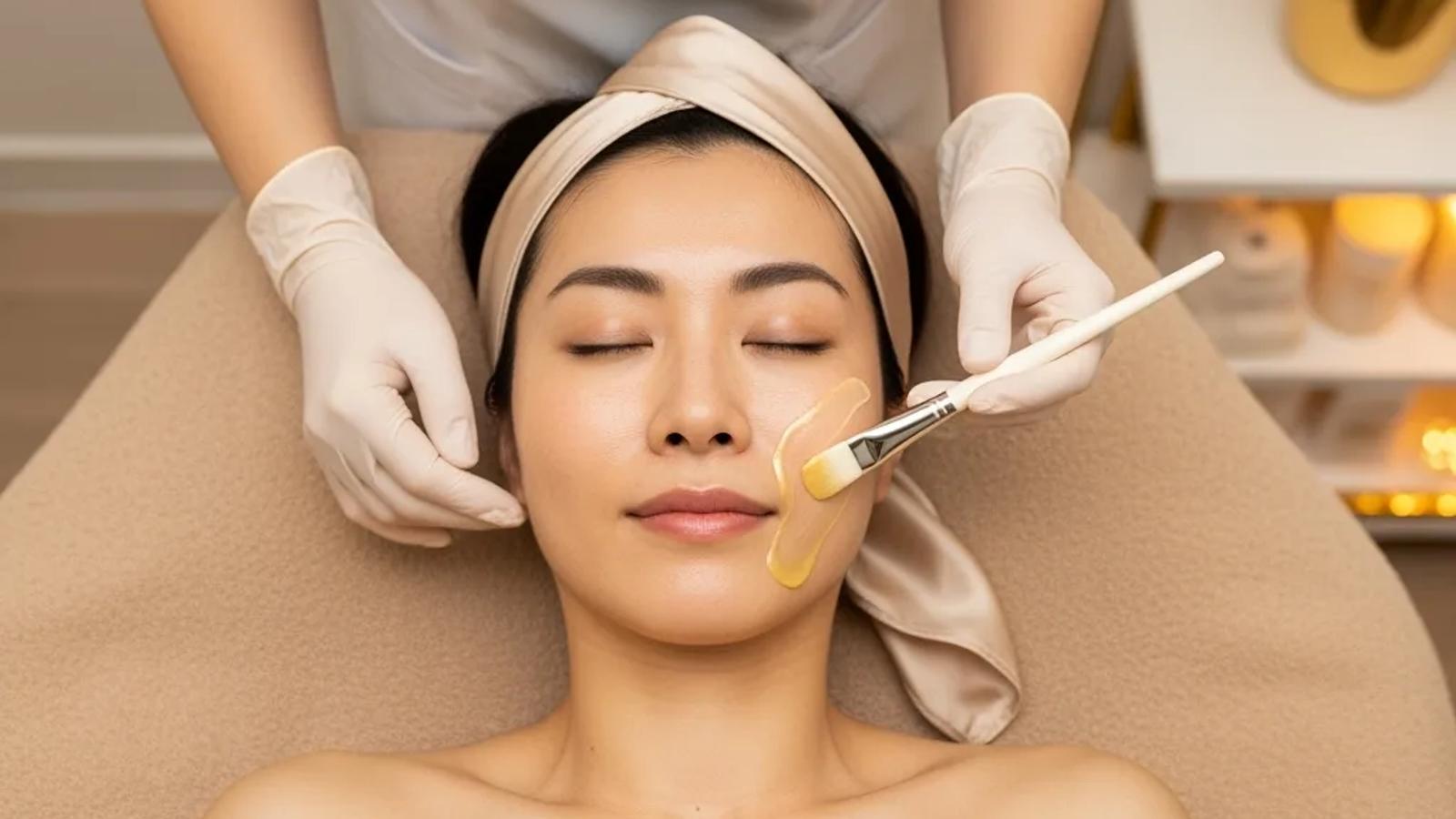
Key Takeaways
- A peel uses acid to loosen surface cells so smoother skin can appear after shedding (ASDS overview).
- Light peels usually heal in 1-7 days, with scaling for 3-7 days (AAD FAQ).
- Medium peels heal in 7-14 days, while deep recovery runs 14-21 days (AAD timeline; ASDS depth page).
- Glycolic acid can help texture and sun spots, while salicylic acid reaches oil (glycolic review; salicylic review).
- Phenol peels need physician monitoring because heart, kidney, and lung risks are documented (phenol safety review).
A chemical peel uses controlled acid exfoliation so the outer layer sheds and smoother-looking skin can appear (ASDS guide). AAD recommends trained, licensed providers (AAD overview).
At Aura Aesthetics chemical peel treatments in Temecula, Yuliya Gulina, CA Licensed Esthetician #Z 172596 and Face Reality Certified, chooses formulas after skin history. We don't offer injectables, lasers, deep phenol peels, or tanning.
What does a chemical peel actually do?
A peel loosens dull surface cells so the outer layer can shed more evenly (ASDS explainer). AAD lists fine lines, uneven tone, some acne, melasma, and rough sun-damaged texture as concerns peels can improve (AAD concern list).
Plainly, the solution helps remove stale buildup. Not a scrub. Not an acid-strength contest. In our studio, Yuliya checks oil, flakes, dark-mark history, products, and plans. Calm skin accepts treatment better than angry skin.
Peel depth sets the recovery plan
Depth beats acid name. ASDS describes superficial peels as outer-layer treatments (ASDS depth definitions). Medium peels reach outer and middle layers, while deep peels reach the middle layer (ASDS depth definitions). Aura Aesthetics stays in the lighter, esthetician-led lane.
Deep phenol work requires physician care because phenol can affect the heart, kidneys, and lungs (phenol organ-risk review). That is outside our scope.
Superficial / light — Typical healing: 1-7 days (AAD light range); What you may notice: Pinkness, dryness, fine flakes
Medium — Typical healing: 7-14 days (AAD medium range); What you may notice: Redness, peeling, crusting
Deep, physician-only — Typical healing: 14-21 days (ASDS deep range); What you may notice: Significant recovery with medical monitoring
Which peel types fit common skin goals?
Glycolic acid, an alpha-hydroxy acid, can smooth texture, fine wrinkling, and sun spots (glycolic texture review). Salicylic acid, a beta-hydroxy acid, penetrates oil and suits acne-prone congestion (salicylic sebum review).
Names help; judgment decides. Dry or reactive guests may start with an enzyme option. Shiny T-zones and clogged pores may tolerate salicylic acid well. Yuliya matches blend to face. If you are still weighing resurfacing against a gentler polish, our HydraFacial vs. classic facial comparison lays out how those options differ.
How much downtime should you expect?
Light-treatment healing usually runs 1-7 days, with scaling for 3-7 days (AAD scaling window). Medium healing runs 7-14 days, and ASDS lists deep recovery at 14-21 days (AAD comparison; ASDS comparison).
At Aura Aesthetics, "downtime" often means dryness logistics. Foundation may catch near the mouth. Outdoor work, sports, helmets, Temecula heat, and event makeup affect appointment dates. AAD says makeup is usually allowed immediately after a light peel or by the next day (AAD makeup note). In our studio, we often ask you to skip it that day.
What happens before, after, or when we defer?
Intake decides. For a skincare consultation with Yuliya, bring product names, prescription notes, reaction photos, event dates, waxing history, sun plans, and your exfoliant schedule.
A glycolic-acid review describes repeating superficial sessions at a minimum 2-week interval (glycolic interval review). AAD says mild and medium peels can repeat every 2-5 weeks when appropriate (AAD repeat window). We use that range as a ceiling, then adjust to your response.
Afterward, keep the routine plain. AAD recommends daily broad-spectrum SPF 30 or higher, with reapplication every 2 hours outdoors (AAD sunscreen instructions). Pause scrubs, strong acids, and retinoids until your face looks calm. For home basics, use our simple skincare routine guide.
A studio pattern is the rushed event peel. A client books close to portraits, then mentions a new retinoid, beach weekend, or wax. In that case, Yuliya usually chooses a gentler service or reschedules. A calmer plan keeps makeup, photos, errands, and local meetings more predictable than forcing exfoliation before important plans.
Choosing the right peel in Temecula
Skin tone, oil, barrier strength, medication history, and season all change the plan. Melanin-rich complexions can carry higher post-inflammatory pigment risk when resurfacing is too aggressive (skin-of-color review; pigment-risk review).
That does not mean darker skin cannot receive peels. A Dermatologic Surgery study found superficial salicylic-acid peels safe and effective in skin types V and VI (PubMed Fitzpatrick V-VI study). At Aura Aesthetics, Yuliya asks about old blemish marks, melasma, waxing reactions, visor habits, and product stinging. If exfoliation is not the first step, we may choose calming care, hydration work, or dermaplaning in Temecula.
Chemical peel planning in Temecula
A peel can be useful for texture, uneven tone, some acne, melasma, fine lines, and rough sun-damaged skin (AAD treatment-scope summary). It still has to fit your calendar, pigment history, comfort level, home routine, and local commute logistics.
Aura Aesthetics is led by Yuliya Gulina in Temecula. You can book a chemical peel consultation or call/text (771) 444-5444. Compare facials, brightening treatments, and peel options on our services page.
Not medical advice. Individual results vary.
Frequently asked questions
How long does a chemical peel take to heal?
Light peels usually heal in 1-7 days, with scaling for 3-7 days, according to AAD (AAD healing FAQ). At Aura Aesthetics in Temecula, we turn that into practical planning. A light visit may mean pinkness first, then tight patches or tiny flakes around expressive areas. Medium peels are different; AAD lists 7-14 days for healing after a medium peel (AAD medium timeline). ASDS lists 14-21 days for deep recovery (ASDS deep comparison). We ask about photos, uniforms, sports, outdoor work, travel, makeup needs, school pickup, headshots, ceremony makeup, and shade before choosing strength. Badge lanyards and choir nights matter too. If timing is tight, Yuliya usually keeps the plan gentler.
How often should you get a chemical peel?
AAD says mild and medium peels can repeat every 2-5 weeks (AAD repeat window). A glycolic review describes a minimum 2-week interval for superficial sessions (glycolic interval review). At Aura Aesthetics in Temecula, that range is only a starting point. Yuliya checks how the first service healed, whether dryness finished, and whether sunscreen use stayed consistent. Desert weekends, gym classes, swim meets, travel, lifeguard shifts, choir concerts, and helmet use can all change the schedule. Mask friction, patio plans, shade access, and stinging products matter locally too. Sometimes the next best visit is another peel. Sometimes it is a calming facial or home-care cleanup before stronger exfoliation.
Is a chemical peel painful?
Most Aura Aesthetics clients in Temecula describe a light peel as warmth, prickling, or a spicy tingle. It should not feel like sharp pain. That is our first-person studio experience. Yuliya watches color, comfort, timing, and eye watering throughout. ASDS describes superficial peels as outer-layer treatments (ASDS superficial description). If your skin looks stressed, we adjust or stop. Fans, cool air, gauze checks, cotton swabs, mirror breaks, and clear consent cues keep the room calm. Comfort notes go into your chart. Tell us about retinoids, acne prescriptions, exfoliating toners, sunburn, or recent waxing before the appointment. First-time clients may start with a softer studio choice so we can learn their response.
Are chemical peels safe for darker skin tones?
Yes, when the peel is selected carefully. A Dermatologic Surgery study found superficial salicylic-acid peels safe and effective in skin types V and VI (PubMed skin-types V-VI study). The caution is pigment risk; darker complexions have higher post-inflammatory hyperpigmentation risk after aggressive resurfacing (pigment-risk review). At Aura Aesthetics in Temecula, Yuliya treats past dark marks, melasma, waxing reactions, and sun exposure as planning details. Product stinging, heat habits, hats, beach plans, and cleanser sensitivity matter too. Photos of old reactions help. Neck sensitivity and necklace friction matter here too. In practice, that may mean lower strength, wider spacing, or barrier prep first. If pigment risk looks high, we will not push the strongest option.
How much does a chemical peel cost in Temecula?
At Aura Aesthetics in Temecula, a Chemical Peel is $150 for about 50 minutes. The Brightening Treatment is $200, and the Bio Peel, also called an Herbal Peel, is $185. Those are first-party service prices, so confirm current rates when booking. Cost should follow the plan, not the strongest-sounding formula. AAD says mild and medium peels can repeat every 2-5 weeks when appropriate (AAD practical interval FAQ). Yuliya will discuss budget, timing, tolerance, and home care before recommending a single visit or a spaced plan. Wedding trials, teen budgets, payday timing, and travel dates can shape the pace without locking you into a package. No package required.

Written by
Yuliya Gulina
Licensed Esthetician · CA License #Z 172596 · Face Reality Certified · 5+ years in Temecula
Yuliya founded Aura Aesthetics after her own experience with problem skin led her to professional skincare. She builds every visit around a consultation and your skin’s goals — acne, aging, or sensitivity. More about Yuliya