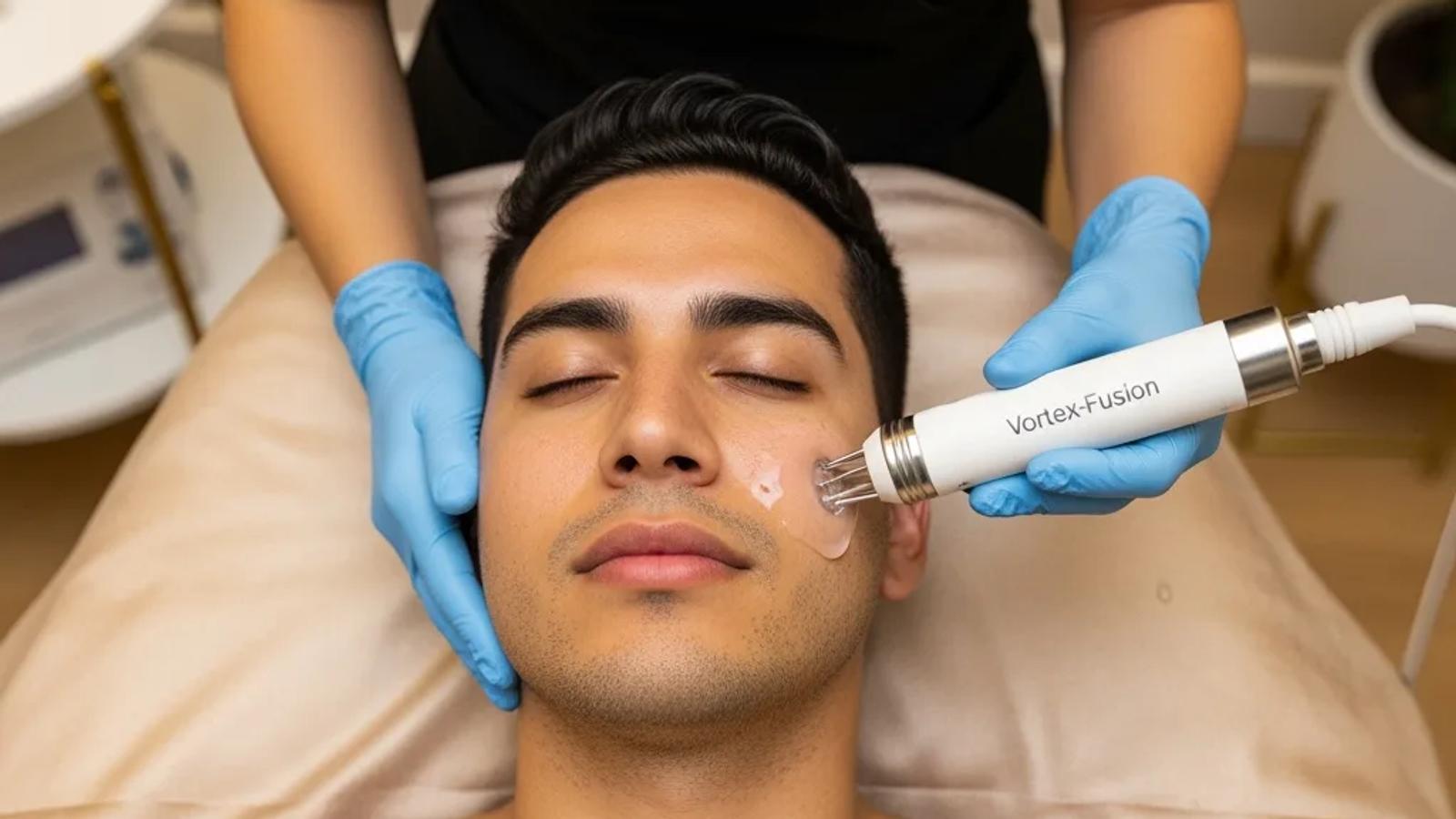
Key Takeaways
- Broad-spectrum sunscreen should be SPF 30+ and water-resistant when needed (AAD sunscreen guide).
- UV can reach skin on cloudy days and reflect from surfaces, so daily protection still matters (CDC Sun Safety).
- Sun exposure is the greatest single factor in skin aging, and it damages collagen and elastin (MedlinePlus aging changes).
- Dark-spot routines start with daily sunscreen, and surface marks may take 6-12 months to fade (American Academy of Dermatology).
- Topical vitamin C can support collagen and reduce UV-related damage when paired with sunscreen (vitamin C review).
We begin post-sun repair with coverage, then move to calm, patient care. At Aura Aesthetics in Temecula, Yuliya Gulina keeps the plan realistic. She is a CA Licensed Esthetician (#Z 172596) and Face Reality Certified. The goal is steady comfort, not a dramatic overnight reset.
What summer sun leaves behind
After a long summer, many guests notice tight cheeks, dull texture, and patchy color. UV exposure can cause wrinkles, spots, and skin cancer, and a sunburn itself signals real harm beneath the surface (MedlinePlus sun exposure).
The deeper concern is cumulative, not cosmetic. Sun is the greatest single factor in skin aging, and it breaks down both collagen and elastin (MedlinePlus aging changes).
That shapes everything that follows. Keep two goals apart. One is cosmetic: softening dryness and uneven tone. The other is safety: flagging any mark that needs a medical eye. We handle the first and refer the second.
Why does post-sun repair start with sunscreen?
Protection comes before any active product. Read the label and pick broad-spectrum coverage with SPF 30+, plus water resistance when you swim or sweat (how to select sunscreen). That single number, 30, anchors a smart routine.
Overcast mornings are not a free pass. Rays still reach your face through clouds, and they bounce off water, sand, and pavement (CDC Sun Safety). A shaded patio lunch quietly adds up.
Are you peeling or tender right now? Pause the actives first. For a fresh burn, dermatologists suggest cool baths, aloe or soy moisturizer on damp skin, extra water, and no popped blisters (treat sunburn). Comfort precedes correction.
How does studio care stay gentle and scoped?
Our work is hands-on and licensed-esthetician scope, so it leans on touch, observation, and smart product choices. Yuliya reads your complexion before she picks a service. She notes redness, flaking, leftover cleanser residue, and the edges of old patches.
Then we talk about your week. How does coverage feel on you? Do chlorine, weekend hikes, and tough workouts leave you parched? Hats and pillowcase buildup often explain stubborn texture too.
When the barrier looks stressed, we usually open with a calming facial rather than stronger exfoliation. Once things settle, we might discuss chemical peels or dermaplaning. Dermaplaning is a low-friction polish; a peel runs more active, so we time it carefully. Want a baseline? Book a consultation first.
A compact home routine
Most guests do better with fewer products, not more. Keep mornings and evenings simple, then adjust with us if anything stings, flakes, or triggers breakouts. The table below shows a starting frame, not a fixed prescription.
Morning — Step: Vitamin C under moisturizer and sunscreen; Why it belongs: Vitamin C is an antioxidant that can support collagen and reduce UV-related damage (vitamin C review).
Morning outdoors — Step: Broad-spectrum SPF 30+; Why it belongs: Choose SPF 30+ and broad-spectrum coverage (sunscreen selection).
Evening — Step: Gentle cleanser and moisturizer; Why it belongs: Use moisturizer with aloe or soy on damp skin when sunburned (sunburn care).
Later, if tolerated — Step: Retinoid conversation; Why it belongs: Retinoids can improve photoaging signs but may irritate, so we pace them slowly (tretinoin review).
When a product stings, we stop and strip back. For more setup help, read our guides to building a skincare routine and summer skincare in Temecula.
How long does post-sun fading really take?
Honest timelines protect you from disappointment. Surface marks may take 6 to 12 months to fade, and deeper pigment can take years (dermatologists). We share that range up front, before suggesting any service.
A pattern shows up often in our chair. Rough texture tends to soften first, while pigment lags behind. So we watch your response over several weeks, then decide together whether to continue or ease off.
Prevention, meanwhile, is lifelong. Age spots cluster where light lands most, like cheeks, hands, and the chest (MedlinePlus aging changes). Steady sun defense keeps fresh damage from undoing slow progress. Your plan might be one visit, a short series, or a product edit.
When is a spot not a facial issue?
Some marks belong to a doctor, not a facial. The ABCDE warning signs for melanoma cover asymmetry, an uneven border, mixed color, a larger diameter, and any evolving change (AAD ABCDEs). A spot that looks new, shifts, itches, or bleeds deserves a board-certified dermatologist.
This is exactly where our role stops. We will not guess at a lesion, prescribe medication, or talk you out of a medical visit.
If Yuliya notices a concern during your appointment, she pauses and points you toward dermatology first. Treatment can wait a week. Your safety cannot. We would rather lose a booking than miss something needing a real diagnosis.
Not medical advice. Individual results vary.
How do you book a post-sun skin plan in Temecula?
Booking starts with a short note, not a locked package. Browse our services, then book online and mention dryness, pigment concerns, sensitivity, recent travel, or a fresh burn. Those details let us prepare before you arrive.
Pricing stays transparent. The Classic Glow facial starts at $150, which is first-party studio information rather than a medical claim. We match each visit to your complexion instead of upselling a bundle. Many guests begin with a consultation, then add a soothing treatment once the barrier feels calm.
One reminder anchors the whole plan. Brighter tone begins with daily sun protection, so every appointment includes hands-on coaching (fade dark spots guide). Availability shifts seasonally, so the booking page always holds current options.
Frequently asked questions
Can post-sun skin damage be repaired?
Some surface changes improve, but the honest answer is limited. UV exposure drives wrinkles, uneven pigment, and cancer risk, so we treat post-sun care as support, not erasure (MedlinePlus sun exposure). Deeper down, the sun remains the greatest single factor in skin aging, breaking down collagen and elastin that no cream rebuilds overnight (MedlinePlus aging changes). Yuliya reads dryness, rough texture, blotchy tone, and any irritation first. Then we talk through your real week, since patio lunches, winery weekends, youth sports, and hat habits all shape the plan. From there, we usually guide hydration, habit coaching, gentle product edits, and a calming facial. Daily coverage stays the anchor, because dermatologists say fading starts there (fade dark spots).
How long do dark spots take to fade after summer?
Expect months, not a quick reset. Surface marks may take 6 to 12 months to fade, and deeper pigment can take years (the American Academy of Dermatology). We explain that timing before recommending any service. Yuliya may focus first on daily habits, barrier comfort, and how your products feel. If your complexion looks calm, she might add esthetician-scope exfoliation or a brightening facial. If pigment runs deep, patchy, or ties to medication questions, we refer you onward. We also weigh outdoor work, recent burns, melasma history, and pregnancy changes, since those details set the pace. Old vacation photos help us read progress too, because slow fading is easiest to see month over month.
What should I do if my skin is burned or peeling?
Pause treatments and calm the burn first. The recommended steps are cool baths, aloe or soy moisturizer on damp skin, extra water, and leaving blisters alone (AAD sunburn care). We will not exfoliate over active peeling or tenderness. Yuliya would rather reschedule than aggravate a stressed barrier. So we keep things simple for a few days: gentle cleanse, moisturizer, shade, and SPF once your face tolerates it. Please skip scrubs, fragrance-heavy masks, and strong acids until the heat settles. Does anything worry you? Contact a medical professional before booking. After the surface calms, we rebuild slowly with hydration, then reintroduce actives one at a time so the barrier stays comfortable.
Can I use vitamin C or a retinoid after summer?
Maybe, but timing matters. Topical vitamin C is an antioxidant that can support collagen and reduce UV-related damage, which makes it a practical sunscreen partner (vitamin C review). Retinoids can improve photoaging signs like wrinkles and mottled hyperpigmentation, though irritation is a known issue (tretinoin review). Yuliya checks sensitivity before stacking actives. Bring your bottles or ingredient photos if you already use strong formulas. We might keep the antioxidant in your morning, pause gritty exfoliants, and delay a retinoid until your barrier feels steady. Pairing vitamin C with daily sunscreen is the reliable combination, since the antioxidant complements coverage rather than replacing it (vitamin C review). We can work around prescription regimens and acne plans, but we never replace your prescriber's advice.
How much does a post-sun facial cost in Temecula?
The Classic Glow facial starts at $150, which is first-party studio information rather than a medical claim. For post-sun repair, we usually start with fit instead of a preset package. Yuliya weighs dryness, flaking, pigment pattern, your event timing, budget, and what you can realistically maintain. Brightening always begins with daily sun care, so a visit includes hands-on coaching (fading dark spots). Remember the timeline too: surface marks may need 6 to 12 months to fade. One facial is a starting point, not a finish line. Does your complexion need a consultation first? Book that. If it just needs a calm facial, Classic Glow may be enough alone. Current options are easiest to confirm through the booking page.
Should I see a dermatologist for sun spots?
Yes, if a mark is new, changing, itching, bleeding, or simply worrying you. Those signs deserve a board-certified dermatologist, and the ABCDE guide covers asymmetry, border, color, diameter, and evolving changes (ABCDEs of melanoma). It helps to learn that alphabet, because any mark that scores on a single letter earns a professional look. We run a licensed-esthetician studio. Yuliya can support healthy-looking habits, barrier comfort, and cosmetic surface care, but she cannot diagnose a lesion. We pause whenever something falls outside our scope and recommend dermatology first. Bring recent photos, the dates a mark shifted, and any family-history notes, since that context helps your doctor. You can return for facial treatment after medical clearance, though safety always gets first priority.

Written by
Yuliya Gulina
Licensed Esthetician · CA License #Z 172596 · Face Reality Certified · 5+ years in Temecula
Yuliya founded Aura Aesthetics after her own experience with problem skin led her to professional skincare. She builds every visit around a consultation and your skin’s goals — acne, aging, or sensitivity. More about Yuliya